Learn more: Soil Health & Compost
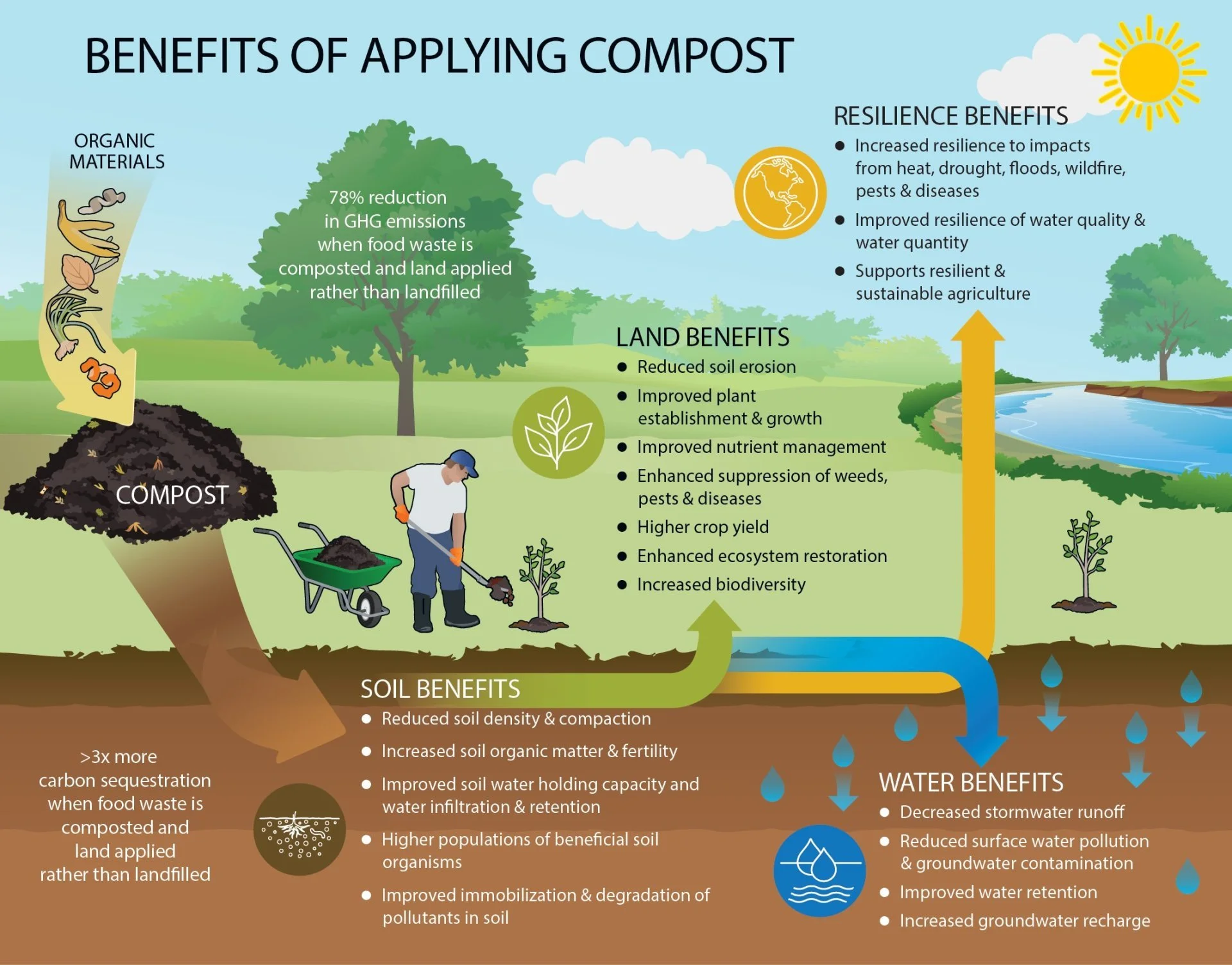
As defined by the USDA Natural Resources Conservation Service (NRCS), soil health is the continued capacity of soil to function as a vital living ecosystem that sustains plants, animals, and humans. As a soil amendment, compost helps to promote soil health, improving the physical, chemical, and biological characteristics of soil.
Compost is a source of organic matter, providing nutrients and structure to soils. Soil organic matter helps to create stable soil aggregates, which increase soil porosity and makes soil more resistant to being dispersed by wind and rainfall, inhibiting soil erosion. Improved soil porosity and lower bulk density facilitate water infiltration, water percolation, and soil aeration, helping soils absorb and retain more water and providing space for roots to grow and for soil organisms to move and breathe.
Compost application benefits soil chemistry as well, stabilizing the pH of soil and adding nutrients to increase soil fertility. Compost contains essential plant macro- and micronutrients, including nitrogen (N), phosphorus (P), and potassium (K). These nutrients are mostly in slow-release, organic forms which are less prone to run off and cause pollution in water bodies, compared to inorganic fertilizers. Applying compost can help soil retain nutrients and keep soil pH near neutral, which enhances the availability of nutrients to plants.
Compost also increases the organic carbon in soils by adding carbon directly and by increasing the productivity of plants, which in turn add carbon through roots and residues. Finally, compost benefits soil biology by improving the diversity and abundance of beneficial soil organisms, who feed on soil organic carbon and make nutrients available for plants to use.